Transformative Benefits of Integrating Contract Assembly into Your Operations
Understanding Contract Assembly Services
What Are Contract Assembly Services?
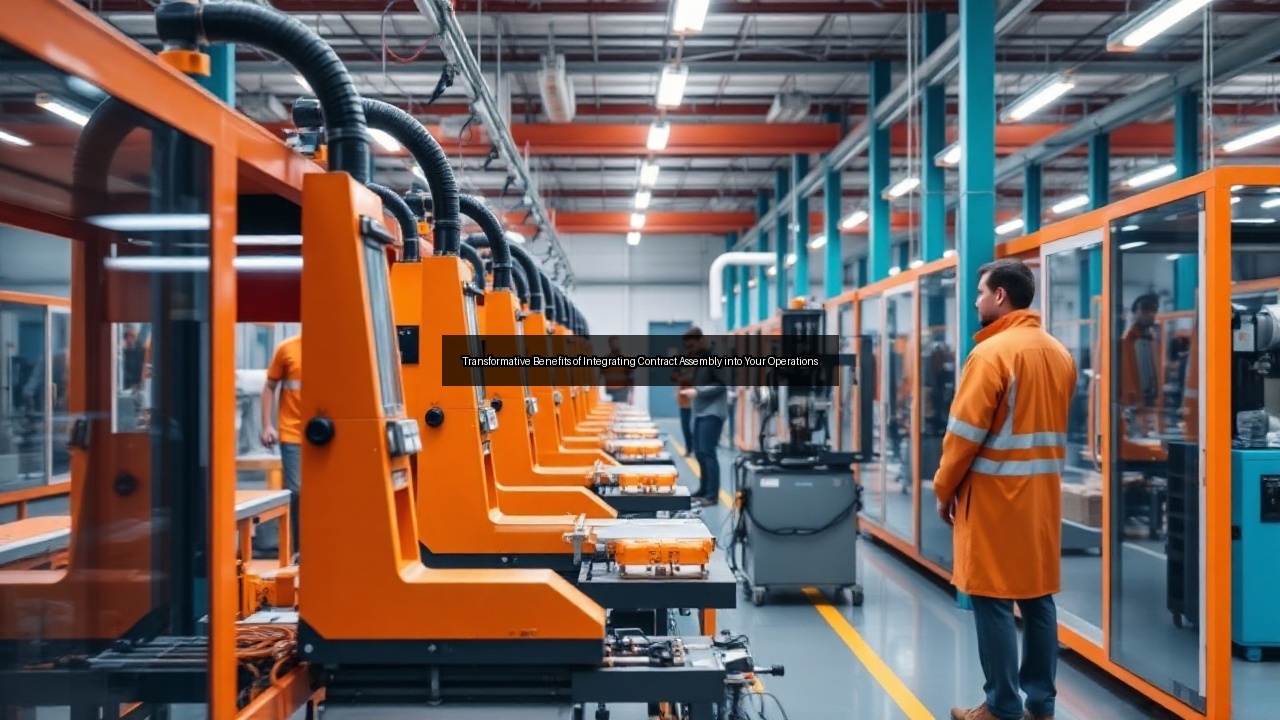
Contract assembly services involve outsourcing the assembly of products to specialized manufacturers. These services allow companies to focus on their core competencies while leveraging the expertise of contract manufacturers. Organizations often seek contract assembly providers to handle complex assembly tasks that require precision and efficiency. The ability to streamline production processes through outsourcing has become an essential strategy for many businesses aiming to enhance their operational capabilities.
Key Components of Contract Assembly
Several key components define contract assembly services. First, the assembly process must be tailored to meet specific manufacturing needs. This involves understanding the product design and requirements, ensuring that the assembly aligns with the company's overall goals. Additionally, sourcing quality materials is crucial. Contract manufacturers often maintain relationships with suppliers to guarantee the procurement of high-grade components. Furthermore, effective quality control measures, often compliant with ISO 9001 standards, play a significant role in ensuring the finished product meets all specifications. All these elements combine to create a cohesive assembly strategy that enhances product quality and operational efficiency.
The Role of Contract Manufacturers in Production
Contract manufacturers serve as expert partners in production, bringing invaluable experience and resources to the assembly process. They not only provide the necessary labor force but also have access to advanced technologies and equipment that may be prohibitively expensive for smaller companies to acquire. Their expertise in engineering and prototyping allows for rapid development and iteration of product designs. By integrating contract manufacturers into the production process, companies can achieve greater scalability and flexibility, adapting quickly to changes in market demand. This collaboration transforms the way organizations approach manufacturing, resulting in enhanced productivity and reduced lead times.
Transformative Benefits of Integrating Contract Assembly
Improved Efficiency and Scalability
Integrating contract assembly services significantly boosts operational efficiency. Companies can streamline their production processes by outsourcing assembly tasks, allowing them to focus on design, marketing, and distribution. Contract assembly providers possess specialized skills and technologies that enhance the speed and accuracy of production. This leads to quicker turnaround times and improved output without the need for heavy investments in in-house capabilities. Furthermore, the scalability offered by contract manufacturers enables businesses to ramp up production in response to increased demand or launch new contract assembly company products without the associated risk and costs of expanding internal resources.
Cost-Effectiveness: In-House vs Outsourcing
The debate between in-house manufacturing and outsourcing often centers on cost. Contract assembly services deliver a clear cost advantage. Companies can reduce overhead expenses associated with labor, equipment, and facilities by partnering with contract manufacturers. These providers typically operate at scale, allowing them to negotiate better prices for materials and leverage efficient production techniques. Additionally, outsourcing minimizes the financial risks tied to fluctuating market demands. Companies can adjust their production levels without incurring excess costs, making contract assembly a financially savvy choice for a variety of industries.
Quality Control and ISO 9001 Standards
Quality control remains a cornerstone of successful contract assembly operations. Many contract assembly companies adhere to ISO 9001 standards, ensuring systematic processes that lead to consistent quality output. By integrating these standards into their operations, companies can trust that their products meet regulatory requirements and customer expectations. Contract manufacturers employ rigorous quality assurance protocols throughout the assembly process, from initial material selection to final inspections. This focus on quality not only minimizes defects and returns but also enhances brand reputation, ultimately leading to increased customer satisfaction and loyalty.
Choosing the Right Contract Assembly Provider
Evaluating Expertise and Experience
Choosing a contract assembly provider requires careful evaluation of their expertise and experience. Companies should seek manufacturers with a proven track record in their specific industry. Understanding their capabilities, including the types of products they have previously assembled, provides valuable insights into their suitability as a partner. Additionally, companies should assess the provider's experience with similar projects, focusing on their ability to manage timelines and deliver consistent quality. Partnering with an experienced contract assembly manufacturer can significantly influence the success of the production process.
Importance of Engineering and Prototyping
Engineering and prototyping capabilities are crucial when selecting a contract assembly provider. A manufacturer that offers engineering support can help optimize product designs for manufacturability, ensuring that the assembly process runs smoothly. Prototyping services allow companies to test designs before full-scale production, reducing the risk of costly errors. This iterative services from contract assembly manufacturer approach fosters services from contract assembly manufacturer innovation and improves the overall quality of the final product. By choosing a provider that prioritizes engineering excellence, companies can ensure their designs translate effectively into production, minimizing complications down the line.
Logistics and Packaging Considerations
Logistics and packaging play essential roles in the contract assembly process. A proficient contract assembly provider should have robust logistics capabilities to ensure timely delivery of materials and finished products. This includes managing inventory levels and coordinating shipments efficiently. Packaging is equally important; it protects products during transit and enhances market appeal. Companies should consider how their contract manufacturer approaches packaging, as this can influence both the effectiveness of their supply chain and the perception of their brand. A well-rounded contract assembly provider will offer comprehensive solutions that address these logistical challenges.
Future Trends in Contract Assembly Services
The Impact of Lean Manufacturing on Operations
Lean manufacturing principles are reshaping contract assembly services, driving operational improvements across the industry. By focusing on waste reduction and efficiency, contract manufacturers can streamline their processes and optimize resource allocation. This approach not only decreases production costs but also enhances product quality and delivery times. Companies embracing lean methodologies in their assembly operations can better adapt to market fluctuations and consumer demands, creating a more resilient supply chain. As lean practices become more prevalent, companies that integrate these strategies stand to gain a competitive edge in their respective markets.
Emerging Technologies in Assembly and Fabrication
Emerging technologies are revolutionizing contract assembly services, introducing automation, robotics, and advanced manufacturing techniques. Automation increases efficiency and reduces the potential for human error in assembly processes. Robotics can handle repetitive tasks, allowing skilled workers to focus on more complex operations. Additionally, technologies such as 3D printing enable rapid prototyping and customization, enhancing design flexibility. As these innovations continue to evolve, contract manufacturers will become more adept at meeting diverse production needs, ultimately transforming the landscape of assembly and fabrication.
Sustainability and Powder Coating Innovations
Sustainability remains a key focus in manufacturing, influencing contract assembly services as companies seek eco-friendly practices. Innovations in powder coating represent a significant advancement, providing a durable and environmentally friendly finish for products. Unlike traditional liquid coatings, powder coatings contain no solvents and produce minimal waste, making them a greener option. As businesses increasingly prioritize sustainability, contract manufacturers that adopt these practices will likely attract environmentally conscious clients. The future of contract assembly services hinges on the ability to balance efficiency with eco-friendly initiatives, ensuring that manufacturing not only meets current demands but also protects the planet for future generations.